Mateo
Full Stack Developer
ReactNode.jsPythonTypeScriptNext.jsMongoDBAWSAIAPIs

Resources
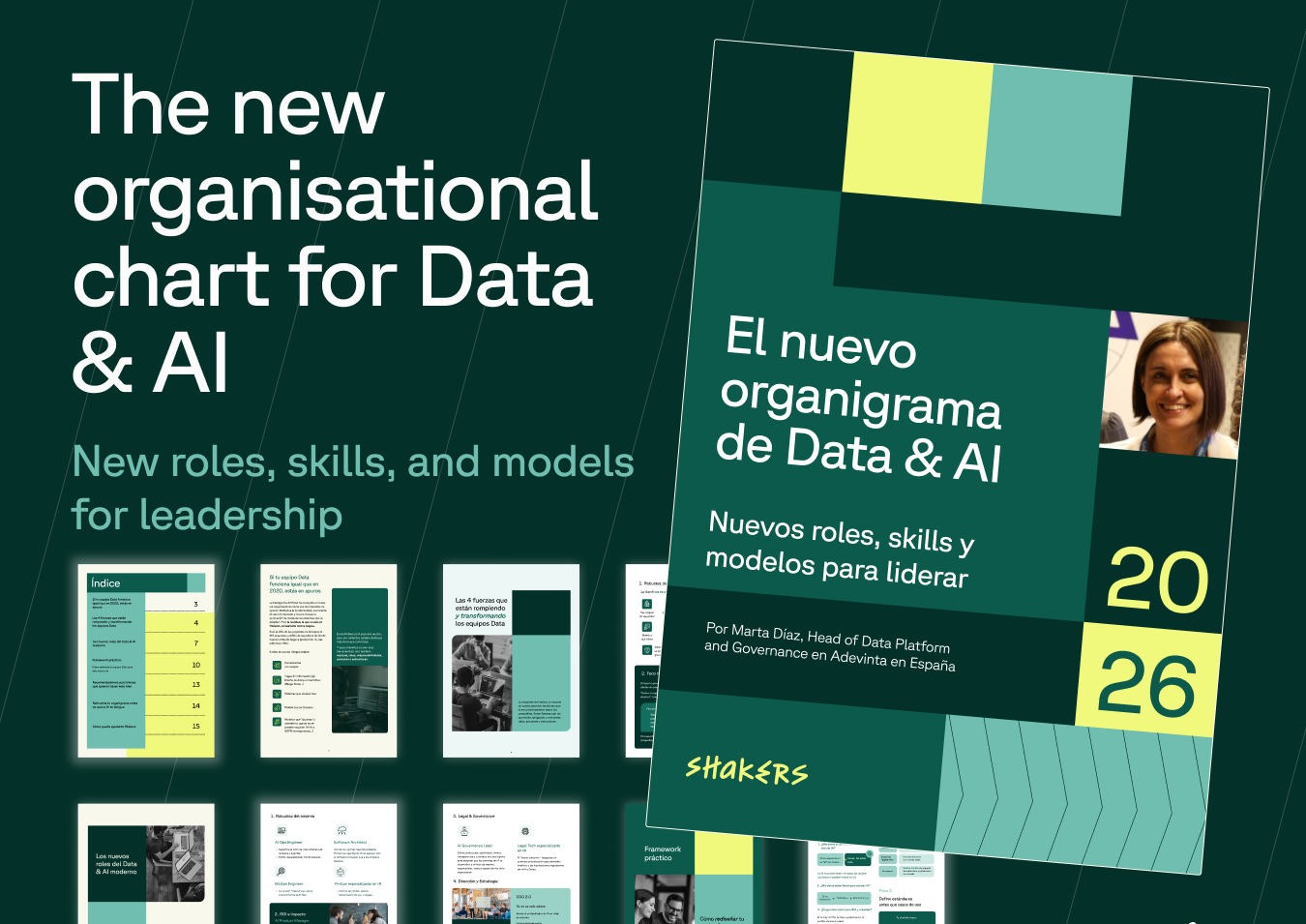
Data & AI's new organization chart
A practical guide to new roles, skills and models for leadership.
Shakers for companies
A certified SRE who turns operations into software: SLOs the business understands, alerts that fire before the customer notices and incidents closed with a written root cause analysis.
Senior tech talent for your platform's reliability, starting within days and on the infrastructure you already run in production today.





















European clients across different industries
We work with the top 4% of certified talent in our community
Meet 3 certified candidates in under 72 h
Our clients' satisfaction on Trustpilot
The talent mix your company needs


.webp?width=1000&height=1000&name=Builder%20Kit%20(1).webp)

A Site Reliability Engineer (SRE) applies software engineering to operations: they set service level objectives (SLOs) with their error budget, automate repetitive manual work (toil) and respond to incidents with blameless reports that close the root cause.
The role was born at Google and is now a craft of its own: where DevOps automates the software's path, the SRE keeps the system that already runs in production alive.
One provider. One contract. Full traceability
Tell us about the project, its scope, the expertise you need and when you want to get to work.
We match your brief against certified talent and introduce the three AI Builders who fit best.
Meet the three specialists and choose who you collaborate with; we handle the rest.
Why work with Shakers
Availability objectives measured as error budget: you stop debating whether the system is fine and see it in a number.
Observability with thresholds and owners in Prometheus or your stack: what matters rings, the rest stays quiet.
Coordinated response and blameless reporting: every outage leaves a document that prevents the next one, not a Slack thread.
Toil gets measured and eliminated: on-call checks and recoveries done by hand today move into scripts and code.
Rotation and escalation designed, with runbooks anyone on the team can execute at 4 a.m.
An SRE by project, no hiring process: certified talent that joins with your access and your environments.
The SLOs of your critical services with their error budgets, the observability dashboard that measures them and the first incident report on the outage people still shout about.
328 active tech job ads in Spain mention site reliability and 1,040 use the SRE acronym, according to Shakers' market analysis (n=30,508, September 2026). LinkedIn lists over 2,000 Site Reliability Engineer jobs.
They do not design your cloud architecture nor automate the deployment pipeline: they keep what already produces running. If the system falls over and nobody knows why, it is theirs.
The brief arrives with the symptom: on-call that burns people out, alerts nobody reads. Scope closes before kickoff.
Connect with AI specialists to build your next project
Their pipeline deploys what your SRE keeps alive: when deployment is the problem, the boundary starts there.
Designs the platform whose availability you will measure: architecture decisions before setting SLOs.
The DevOps cut of the Amazon ecosystem: when the environment is pure AWS and the problem is the pipeline.
Their services are the ones that page: when the failure is code rather than platform, diagnosis is shared.
We introduce you to three ready_to_build AI Builders in 72 hours.

 English
✓
English
✓
At Shakers, we use AI to represent some of our AI Builders, thereby protecting their privacy.